Your rating moved.
Your patients moved with it.

The way it usually goes in a dental practice
Your rating dropped from 4.8 to 4.6 last quarter. Three competing practices in your catchment have higher ratings than they did last year. A patient leaves a one-star review at 9pm Friday — nobody sees it until Tuesday.
This is how most dental practice owners read their reputation. Not for lack of clinical care. For the lack of a tool that reads the patterns underneath the numbers.
How dental practices use Pinn
Three patterns we see most often.
Single practice understanding a rating drop
Your rating dropped from 4.8 to 4.6 last quarter. You don't have time to read 340 reviews. Pinn reads them in an afternoon, identifies that Tuesday morning wait times drove 60% of the drop, and surfaces the three reviews behind the pattern. Your Monday brief includes the recommendation: review Tuesday scheduling buffer between 9:00 and 10:30.
Multi-practice group with manager accountability
You own three practices. Each has a manager. You don't know which manager is replying to reviews, how fast, or whether the brand tone is consistent. Pinn shows it on one screen — every practice, every manager, every reply, every response time. The Monday brief consolidates the group view with per-practice detail.
Crisis response for high-risk reviews
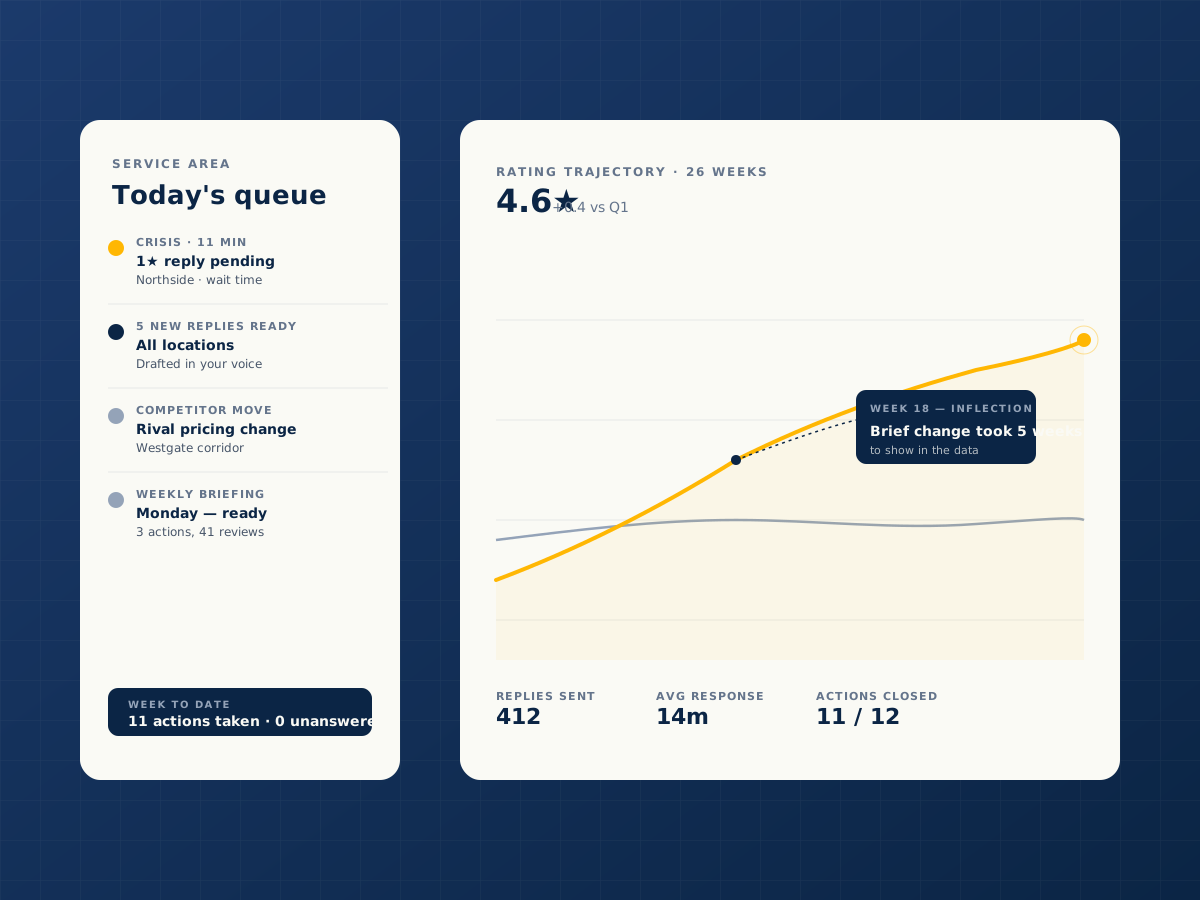
A one-star review lands Friday evening. Your practice manager is off. The review sits unanswered until Wednesday. By then, 40 prospective patients have read it. Pinn detects the review within 15 minutes, drafts a GDC-aware reply that never references specific procedures or identifies the patient, and sends the alert to your phone. You approve from your weekend.
Thank you for raising this. We’d like to discuss it directly — please reply via our private line so we can take this forward in confidence.
What this looks like
The same Monday morning, read two different ways.
- “Long wait”
- “Great staff”
- “Pricey”
- “Service was slow”
- “Friendly team”
Without Pinn: You open Google. You scroll through reviews. You see fragments — a complaint, a compliment, another complaint. You make a guess about what’s moving the needle. Monday’s team meeting talks about “improving reviews” generically. You won’t know if the plan worked until next month.
Review Tuesday scheduling buffer between 9:00 and 10:30.
With Pinn: You open your X-Ray. The drivers are ranked. The themes are named. The reviews behind each pattern are linked. Your Monday brief is already in your inbox with the specific action for the week. Monday’s team meeting has a name, a number, a window, and a decision. The guess is gone.
This is what reading reviews actually looks like — not scanning, not guessing. Reading.
Frequently asked questions
The questions dental practices owners ask us most.