It is Monday. What now?
The way it usually goes
You sit down with coffee Monday morning. You open your dashboard, your spreadsheet, your inbox. The numbers are in front of you — rating, review count, weekly bookings. Some moved. Some did not. You see what changed but not what to do.
You go to the team meeting. The agenda has a line that says "improve customer experience." Everyone agrees. Nobody knows where to start. The week begins with motion — not direction.
By Wednesday, you are back in operations. Friday rolls around. Next Monday, the numbers have moved again, and the cycle repeats.
This is how most owners run their week. It is not a failure of discipline — it is the absence of a tool that turns the data into a specific action for the next seven days.
How Pinn does it
Three steps between the data from last week and the specific actions for this week.
- 01
Pinn analyzes what changed and why
Every Sunday night, Pinn runs a full analysis of your last seven days — review themes, rating drivers, competitor movement, response performance. The shifts that matter are identified, the noise is filtered out.
[Weekly analysis pipeline]Seven days of signal synthesized overnight. - [Prioritized recommendation list]
Pattern-specific actions, ranked by impact. 02Recommendations are generated, prioritized for impact
From the analysis, Pinn drafts one to three specific actions for the week ahead. Each one is tied to a real pattern — a theme that is slipping, a competitor gap that is widening, a slot in your week that is driving complaints. The recommendations are tuned for your industry: scheduling buffers for dental, menu prep for restaurants, technician routing for home services.
- 03
The brief lands Monday morning, before your week starts
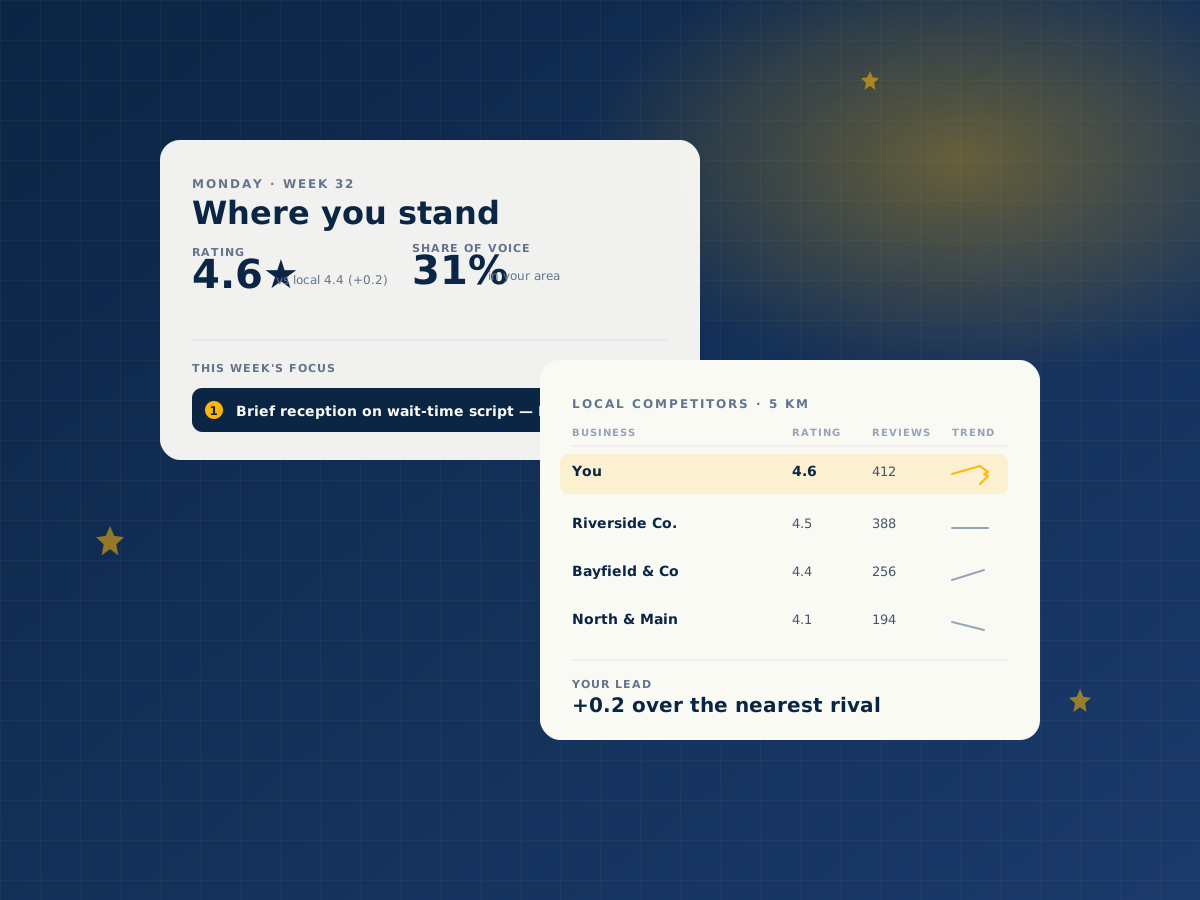
A 300-word weekly brief arrives in your inbox at 8am local time. It opens with what changed. It closes with the actions for the week. You read it with your coffee, in two minutes, before the day begins.
[Monday brief preview]Inbox at 8am local — readable with your first coffee.
What this looks like
The same Monday morning, read two different ways.
Without Pinn
You open Google. You scroll through reviews. You see fragments — a complaint, a compliment, another complaint. You make a guess about what is moving the needle. Monday team meeting talks about "improving reviews" generically. You will not know if the plan worked until next month.
With Pinn
You open your X-Ray. The drivers are ranked. The themes are named. The reviews behind each pattern are linked. Your Monday brief is already in your inbox with the specific action for the week.
Monday team meeting has a name, a number, a window, and a decision. The guess is gone.
This is what reading reviews actually looks like — not scanning, not guessing. Reading.