A competitor moved. You do not know how yet.
The way it usually goes
You hear about a competitor doing well. Maybe a customer mentions it. Maybe you drive past their parking lot on a Tuesday and it is full while yours is not. You open Google and check their profile. Their rating is higher. They have picked up a few new five-star reviews this month. You read three of them.
You make a guess about what they are doing differently. Better staff? Better service? Better pricing? You bring it up in the next team meeting. The team nods. Nothing specific changes.
This is how most owners track their competitors. It is not a failure of attention — it is the absence of a tool that reads competitor patterns alongside your own.
How Pinn does it
Four steps between a connected profile and a theme-by-theme view of where competitors are winning.
- 01
Pinn detects your local competitors automatically
When you connect your business, Pinn analyzes your location, category, and local market patterns to identify the competitors that actually compete with you. No manual list-building. No guessing who matters.
[Competitor auto-detection map]Map-based competitor detection in your local catchment. - [Competitor reviews — theme-by-theme]
Your theme distribution, compared against a competitor’s. 02Competitor reviews are read the same way yours are
Reviews from every competitor are ingested and categorized by theme — the same theme vocabulary tuned for your industry. You see what their customers say about wait times, staff, service, and pricing, broken down the same way as your own.
- 03
Gap analysis shows exactly where they are winning
Pinn compares your themes against the themes of each competitor. You see which themes they outperform you on, which ones you own, and where the gaps are widening or closing month over month.
[Theme-by-theme competitor gap chart]Themes ranked by competitive advantage and disadvantage. - [Competitor movement timeline]
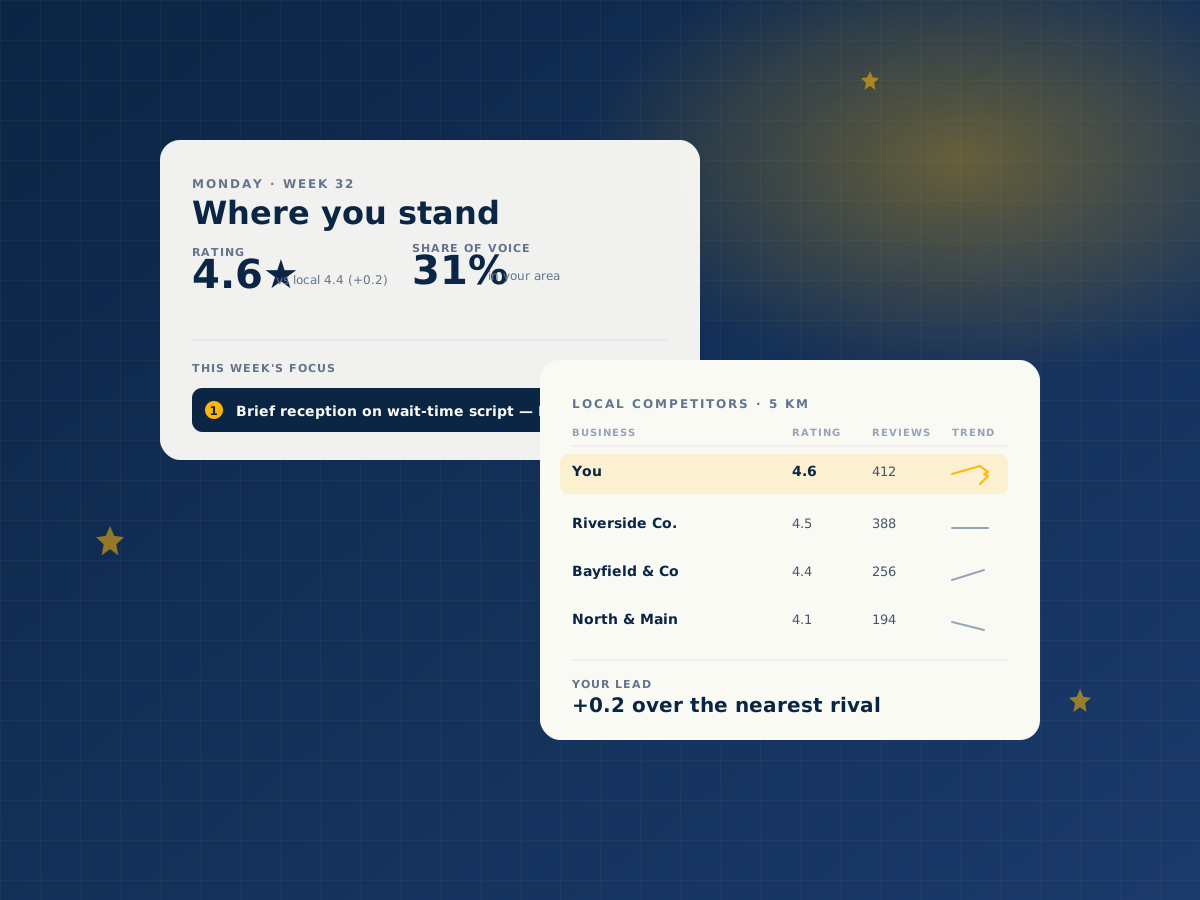
Competitor activity section of the Monday intelligence brief. 04Movement is tracked — when a competitor shifts, you know
When a rating shifts for any competitor, when their review volume accelerates, when a new theme emerges in their reviews — Pinn surfaces it in your weekly brief. You see what changed and when, before it changes the local market.
What this looks like
The same Monday morning, read two different ways.
Without Pinn
You open Google. You scroll through reviews. You see fragments — a complaint, a compliment, another complaint. You make a guess about what is moving the needle. Monday team meeting talks about "improving reviews" generically. You will not know if the plan worked until next month.
With Pinn
You open your X-Ray. The drivers are ranked. The themes are named. The reviews behind each pattern are linked. Your Monday brief is already in your inbox with the specific action for the week.
Monday team meeting has a name, a number, a window, and a decision. The guess is gone.
This is what reading reviews actually looks like — not scanning, not guessing. Reading.